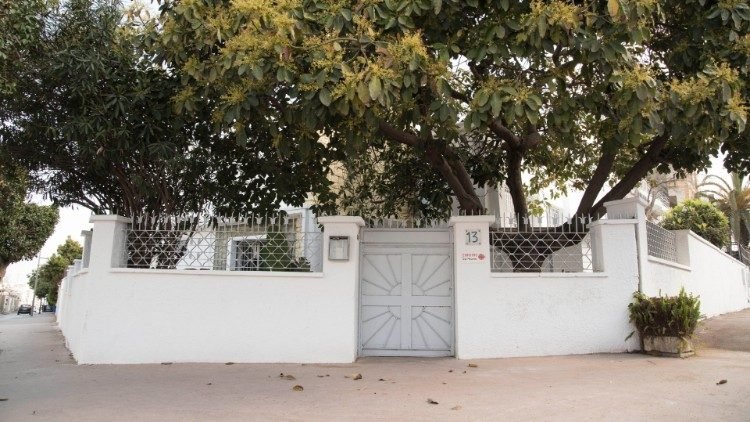
People should take the time to listen to Pope Francis when he speaks about the situation of migrants, despite discussions on the topic being dominated by a climate of fear, says the Director of Caritas Rabat in Morocco, Hannes Stegemann.
By Paul Samasumo – Rabat, Morocco
When I met Hannes Stegemann, in his very Spartan office, I understood why Pope Francis is visiting this centre that does so much for migrants from Sub-Saharan African countries.
There was so much to do before the arrival of Pope Francis at the centre. Stegemann was very busy preparing for the visit and people from the state, local and international media – the whole world wanted his attention. Still, he found time to speak with me and explain what Caritas Rabat does. He is a calm and generous person.
Supporting civil society
Caritas Morocco is best known for its work with migrants, but that is just part of what they do. They support programmes for civil society in Morocco, work with traditional rural development programmes in the country and currently they accompany fourteen Moroccan associations that work with disabled persons.
But, “yes, we are better known to the larger public for our work in favour of migrants passing through Morocco or (those) who install themselves here (in Morocco),” Stegemann says.
Asked about what he felt regarding Pope Francis coming to visit and meet the 60 migrants at the centre, Stegemann responds:
“Tremendous pleasure and honour to be visited by the Holy Father who will meet 60 migrants here in the headquarters of Caritas Rabat.”
Economic migrants
Regarding economic migrants, Stegemann gives the view of Caritas Morocco:
“An economic migrant is not a bad person. He is just looking for an income to feed his family (especially) coming from countries where there is no state or social assistance. (Migrants) go where there the work is – it can be in Africa (or elsewhere),” Stegemann says.
He adds, “It is a long tradition for most of these people. Before the Schengen Agreement (of 1985) in Europe, it was common for young men to go, for example, to France in the Summertime to work in the French automobile industry and then go back and come again in next year. The circular economic migration worked very well. That has changed enormously,” he says.
Another issue sometimes overlooked is that, before the collapse of Muammar Gaddafi, between 1 million to 1.5 million sub-Saharan people were working in Libya. That too changed with the fall of that Libyan government, Stegemman notes.
Stegemman hopes that people in Europe, the media, politicians, and particularly countries with substantial Catholic populations would take time to listen to Pope Francis when he speaks about the situation of migrants.
At the moment discussions are dominated by a climate of fear, he emphasises