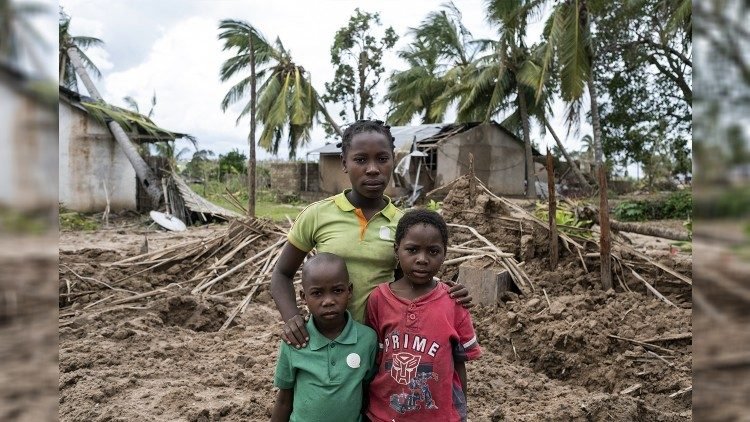
UNICEF says that with only 42 per cent of the initial appeal funded, up to 2 million people may face severe levels of food insecurity between now and the next harvest in Mozambique.
UNICEF – Maputo, Mozambique
The United Nations and humanitarian partners, in support of the government’s National Institute for Disaster Management (INGC), launched on Friday, this week, the revised Mozambique Humanitarian Response Plan (HRP). The Plan seeks an additional US$398 million to meet outstanding life-saving and livelihood support needs driven by the dramatic climate events of the last twelve months, including cyclones Idai and Kenneth, droughts and floods.
After Cyclones Idai and Kenneth, new humanitarian challenges ahead
“The extreme climate-related shocks the country faced over last year require a response of equal proportion”, said Myrta Kaulard, the Humanitarian Coordinator for Mozambique.
The massive and tireless effort of national institutions, civil society, humanitarian organizations and the international community made it possible to meet the immediate needs of the affected population. “The humanitarian response has been extraordinary and yet, while the recovery is still underway, a new cyclone and lean seasons are fast approaching”, reflected Kaulard.
With only 42 per cent of the initial appeal funded, up to 2 million people may face severe levels of food insecurity between now and the next harvest in March 2020. In areas impacted by Cyclones Idai and Kenneth, over 80 per cent of the population is dependent on farming as primary source of income. Many suffered significant crop losses, lands were damaged as well as seed supplies. “There is need to engage to secure the next harvest”, said Kaulard.
Resettled Populations urgently need schools and safe water
“Although remarkable progress has been made in the cyclone responses, there are still areas where access to safe water and health care remains a challenge, urgent repairs to school buildings and houses are necessary”, explained the Humanitarian Coordinator. Myrta Kaulard emphasized that women and children, especially those living in the resettlement sites, have to walk long distances to fetch water, collect wood for cooking and seek health services. “This also raises protection concerns. Schools need to be built closer to the sites so all can attend”, said Kaulard.
Extreme climatic events are posing unprecedented challenges
The Humanitarian Response Plan for Mozambique covers the period until May 2020. “Extreme climatic events are posing unprecedented challenges. On the eve of the Climate Summit in New York I call on the international community to timely and generously support the people of Mozambique. Climate is a global responsibility”, concluded the Humanitarian Coordinator, Myrta Kaulard.